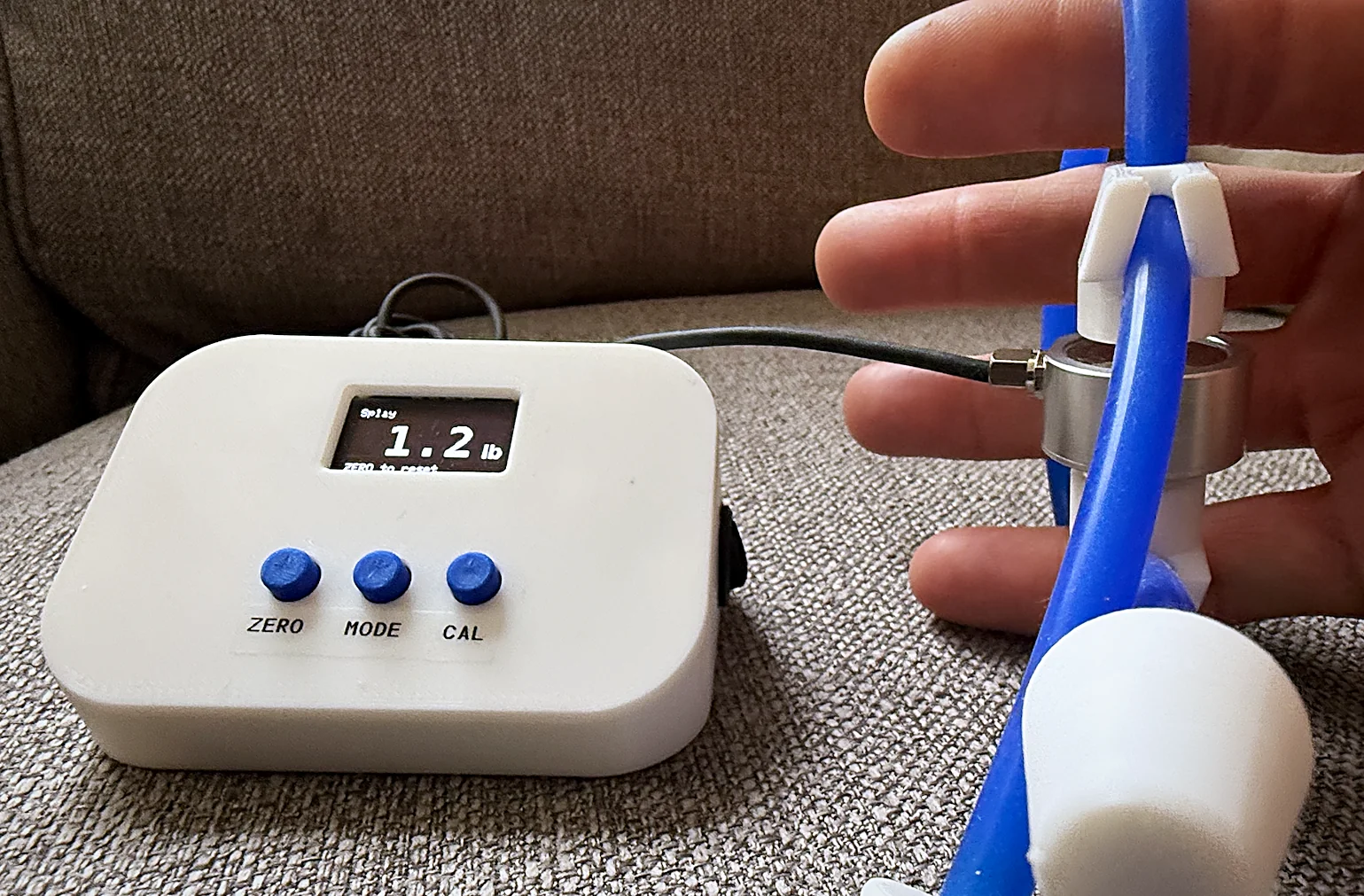
Finger and Hand Strength Measurement
The Splayometer measures finger and hand extension and abduction strength, providing objective measurements for diagnosis and rehabilitation.
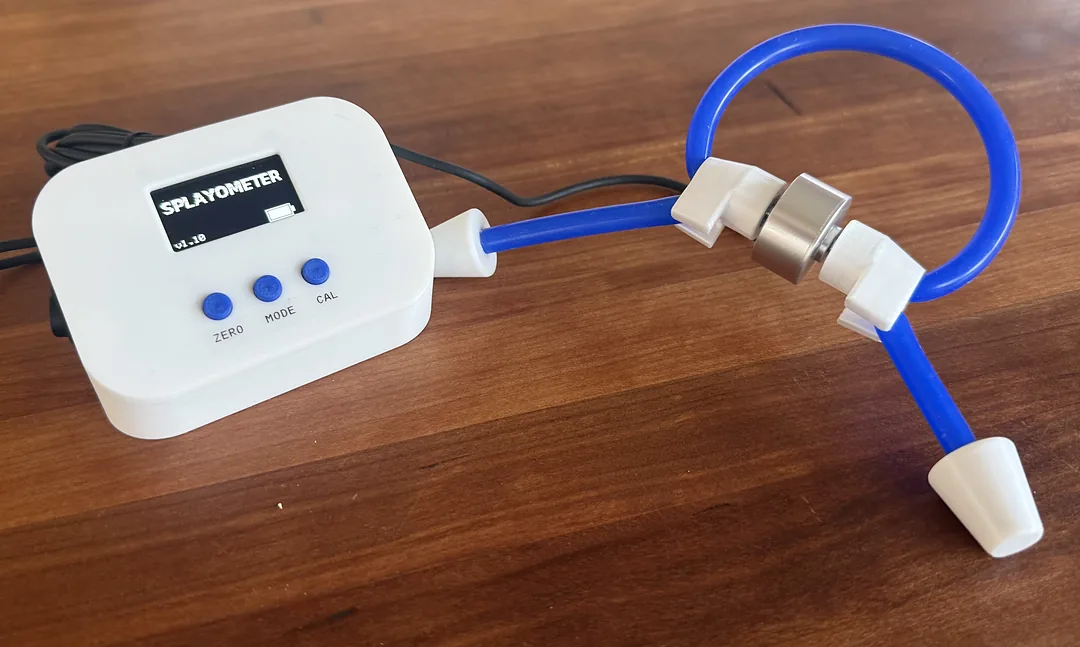
Measuring Extension & Abduction
Instruments for measuring grip and pinch strength have been in clinical use for decades. The Splayometer measures the opposite motion: the force generated when fingers extend, spread, or open the hand against resistance.
Without an instrument, strength in these motions is typically assessed by manual muscle testing, which produces an ordinal grade (0–5).
Read more about the clinical conditions relevant to extension and abduction assessment.
"Although often neglected, finger extension force is of great importance for developing grip strength."
- Brorsson et al. (2008), Technology and Health Care 16:283–292
Subjective Manual Muscle Testing
Therapists resist motion with their own hands and assign a grade, introducing variability and limiting detection of subtle changes.
Quantitative Force Measurement
The Splayometer delivers a precise, reproducible numerical force reading, accurate to ±0.06 lb (~±27 g).
Objective Clinical Data
Baseline documentation, progress tracking, outcome measurement, and medico-legal reporting.
Designed for Multiple Applications
The Splayometer measures the force generated when a patient extends a finger away from the thumb or a fixed anchor, or opens and spreads the hand inside the hand loop.
- Finger-to-Thumb Extension
- Single Finger Extension
- Hand Extension & Abduction
More details on the Standard Use Procedures page.
Compare typical measurements against published Reference Values.
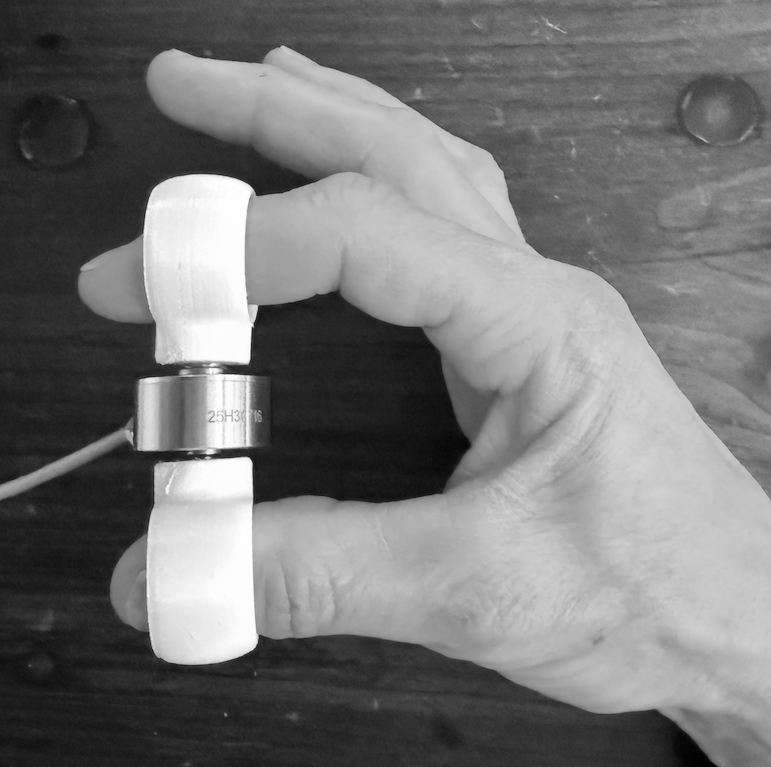
Adaptable and Accurate
The Splayometer pairs a load cell with a rechargeable, battery-powered display module for precise force measurement.
- Stainless-steel cylindrical load cell
- Rechargeable, battery-powered display module; approximately 40 hours of battery life on a single charge
- Separate display and load cell allow flexible positioning during measurement
- Precise numerical force reading with tare/zero and calibration functions
- Holds the maximum value of each measurement until cleared by the clinician
- Average mode displays the mean and standard deviation of three successive measurements
Built for Therapists & Clinicians
- Establish quantitative baseline function at initial evaluation
- Track measurable rehabilitation progress over time
- Document outcomes for medical and medico-legal purposes
- Assess individual digits in isolation or the full hand
- Compatible with standard three-trial measurement protocol